
How Brands Earn Retailer Partnership Status
Updated: Aug 16
The relationship between product manufacturers and retailers has entered a new, high-stakes era.
Price-led growth has peaked. Consumer behavior has structurally shifted. Private label has become a $283 billion strategic weapon. Retail media is a $60+ billion ecosystem that blurs the line between trade spend and marketing investment.
Deloitte's 2026 Retail–CPG Collaboration Benchmark finds ~ 90% of retailers want stronger collaboration with their brand partners. Yet CPG companies cite "a lack of desire" from retailers as the most prominent barrier to collaboration.
Retailers are saying come closer. Brands are hearing stay back. That misread is expensive.

Having led insights work at Samsung and Unilever – and now with clients at Khatanalytics – the pattern is consistent:
It isn’t a communication problem. It’s not even just a data problem. It’s a translation problem.
Retailers aren’t withholding collaboration. They’re reserving it for brands that can translate fragmented intelligence into clear, retailer-specific growth actions.
The door is open. Most brands walk through it with the wrong briefcase.
What's Actually in the Briefcase
Here's a pattern that plays out in buyer meetings more often than anyone admits.
A brand team prepares for weeks. They build a polished deck – consumer trends, brand equity scores, market share trajectory, innovation pipeline. They walk in confident. The first 15 minutes feel good.
Then the conversation shifts. The buyer wants to know:
How is this category performing in my stores vs. my key competitors?
Which shopper segments are growing, which are leaking – and to whom?
How is social and influencer activity reshaping demand – and what should I do about it?
How should my assortment evolve – including private label – to maximize total category performance?
Does your channel pricing strategy strengthen or undermine my competitive position?
These questions separate strategic partners from vendors.
Most teams can’t answer them with precision. While sometimes they lack the right data, it’s primarily because they haven’t translated it into a retailer-specific story with clear actions and financial implications.
That gap is the moment a brand gets mentally categorized as a vendor by the buyer. Most don’t recover within that planning cycle.
Plenty of Data – Poor Wiring Between Them.
Every brand organization generates intelligence.
The issue isn’t a shortage of data – it’s fragmentation, incentives, and ownership.
Critical data lives across silos, governed by different KPIs, budgets, and success metrics. Often, no one is explicitly accountable for translating it into the integrated story the retailer needs to hear.
Consumer intelligence
Owned by marketing. Attitudes, motivations, need states, brand perceptions, cultural and demographic shifts. Built from consumer research, social listening, trend analysis. Answers: Why do people want what they want?
This intelligence typically makes it into retailer meetings – but tied to the brand's own narrative. It rarely translates into implications for the retailer’s category, shoppers, or competitive position. The consumer and brand story is told. The "so what does this mean for your business" is not.
Shopper intelligence
Owned by sales, trade, or category teams. Shopper segmentation, omni-channel purchase behavior, path-to-purchase dynamics, channel choice, basket composition, conversion. Built from syndicated POS data, shopper research, household panels, loyalty data, and retail analytics. Answers: How do people actually shop – and what influences them at the moment of decision?
This team knows what happens at the shelf and on the screen. But they often lack the upstream consumer context to explain why shopper behavior is shifting – or what it signals about where the category is headed for the retailer.

Here’s the structural gap:
Retailer value creation has no clear owner inside most organizations.
And importantly – no aligned incentives.
Marketing is measured on brand equity
Sales is measured on volume and distribution
Category teams are measured on share and execution
Retailers are measured on total category profit
Without alignment, translation doesn’t happen – even when the data exists.
The Capability Gap Isn’t Data. It’s Translation + Incentives
Leading organizations don’t just have better data. They’ve built what can be called a Retail Translation Layer:
A repeatable capability that connects:
Why consumers are changing
How shoppers are behaving
What actions will grow the retailer’s business
And what the financial impact will be
This isn’t a deck. It’s an operating model.
McKinsey's CEB research across 340+ companies supports this.
Commercial excellence leaders:
Are 60% more likely to generate store-specific insights versus 38% of others.
And – critically – embed these into decision-making, not just reporting.
The difference isn’t access to data.
It’s the ability – with incentivized accountability – to translate intelligence into actions that drive growth for both your brand and the retailer.
What This Actually Costs Brands
For CPG brands, the consequences go beyond awkward meetings:
Growth is shifting away from scale.
The largest manufacturers drive ~45% of category sales – but only ~3% of growth (McKinsey). Smaller, more agile brands are gaining share because they show up with sharper, connected, retailer-relevant intelligence.
Trade spend is being deployed without precision.
It’s the second-largest P&L line after COGS, yet 75% of RGM programs fail to deliver profitable growth for both retailer and manufacturer. This isn’t a spend problem. It’s a translation problem.
Private label is compounding the gap.
At $283 billion in 2025, its growth is driven not just by quality perception (71% of shoppers now rate them equal or better in quality) – but by structural advantages: margin control, shelf authority, and direct access to shopper data. Retailers aren’t just reacting to brands – they’re systematically filling the gaps brands fail to identify.
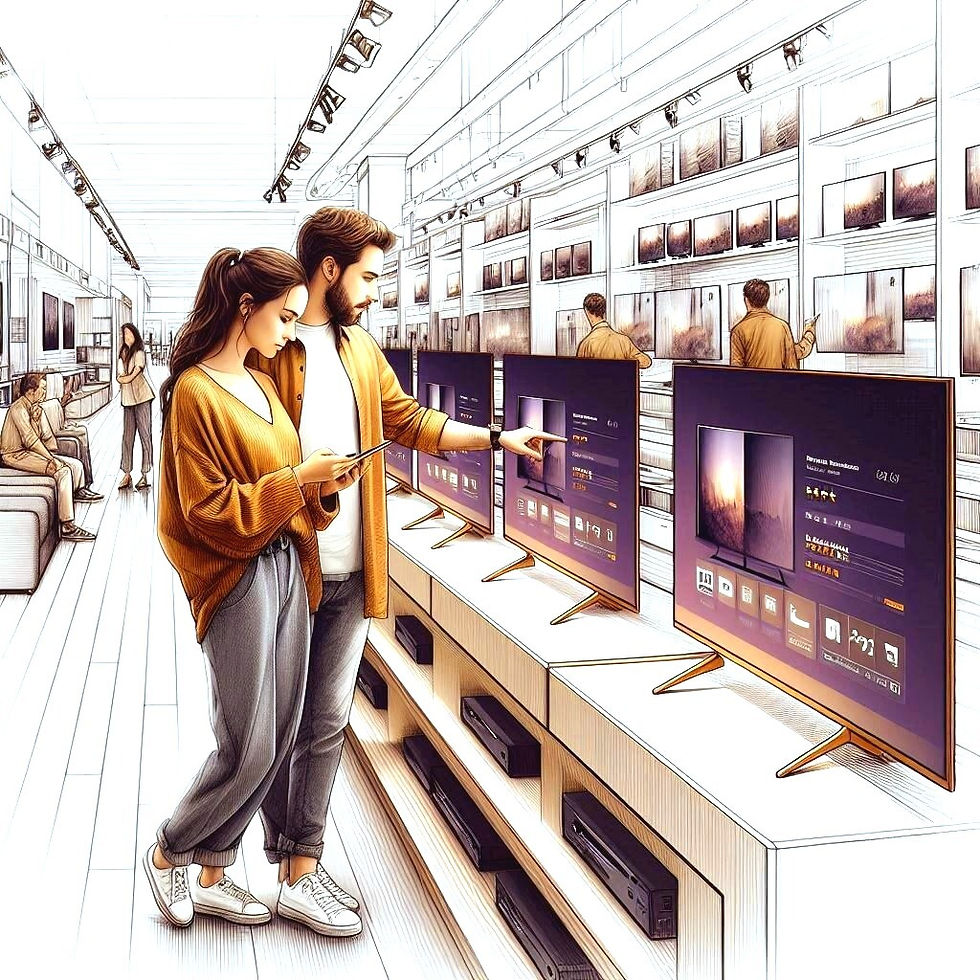
In Consumer Electronics, the penalty is immediate and measurable.
A small number of retailers control the majority of volume and shoppers navigate up to nine touchpoints before converting.
Decisions are driven by:
Margin per square foot
Inventory turns
Attach rates
Conversion across digital and in-store touchpoints
When a CE brand cannot connect feature-level demand (what drives consideration) to shopper behavior (what drives conversion) to retailer economics (what drives profit per foot) – they lose the decision. Quickly.
What Winning Looks Like in the Meeting Room
The difference is visible within minutes.
Average brands:
Present national trends
Argue for their share
Recommend tactics
Winning brands:
Diagnose retailer-specific category issues
Quantify where value is leaking (by segment, store, or channel)
Show how consumers → shoppers → category performance connect
Recommend specific actions with financial impact
Winners don’t just present insights. They present decisions – with the math behind them.

Five Questions Your Retailer Is Using to Evaluate You
These aren't theoretical. They reflect how buyers – explicitly or implicitly – decide who earns strategic partner status, and who doesn't.
1. Can this brand tell me something about my shoppers that I don't already know?
This means intelligence beyond repackaged syndicated trends. It means connecting consumer motivations to actual purchase behavior at this retailer – explaining where shoppers are leaking to competitors, why conversion is declining in specific segments or store formats, and what's driving those shifts.
If your best insight is a national market share slide, you've lost the discussion.
2. Can they show my category performance in full competitive context?
Retailers don't evaluate their categories in isolation. They need to understand how they're performing in context – against other channels, other physical retailers, against online competitors, across their own digital and in-store channels.
Brands that can provide this cross-channel, cross-retailer perspective earn a fundamentally different level of trust.
3. Do they bring me forward-looking intelligence tied to my business?
Winners are 7x more likely to use predictive analytics. Your buyer is comparing you to your competitors who arrive with scenario models and promotional effectiveness forecasting. But prediction alone isn't enough – can your team connect broader shifts (how Gen Z shops differently, how social media is reshaping product discovery, how health trends are restructuring baskets) to specific category implications for this retailer?
That's the intelligence retailers don't have resources to generate on their own.
4. Can they translate that into specific, executable actions that drive stronger conversion?
This is where intelligence becomes action. The buyer needs to know: What should the planogram look like? How should the assortment be structured – including their private label – to maximize category performance? And how should retail media be executed to drive shoppers from awareness to purchase at this retailer?
Brands that can answer this with retailer-specific data and clear financial projections earn the room. Brands that can't are presenting opinions, not recommendations.
5. Are they growing my category – or just their brand?
Winners are 40% more likely to use category-level metrics in joint scorecards. A buyer can tell within minutes whether a brand is there to grow the total pie – sales, margins, and store traffic – or just lobbying for their own shelf space.
The brands that earn strategic partner status can concretely demonstrate why their portfolio, their innovation pipeline, and their go-to-market approach will grow the category more effectively than the alternatives. Evidence, not assertion.
If your team struggles to answer two or more with specificity, the retailer has already made the call.
How Winning Brands Are Closing the Gap
They don’t add more reports or bigger teams. They change how the work gets done.
Ensure current, decision-grade data across consumer, shopper, and retail – continuously refreshed, fully connected, and ready to deploy in real time
Establish clear ownership of retailer value translation (often within RGM, category leadership, or a dedicated integration role)
Align incentives across marketing, sales, and category teams to shared retailer outcomes
Standardize outputs required before every major buyer interaction (category diagnosis, growth drivers, action plan, financial model)
Embed predictive and scenario modeling into planning – not as an add-on, but as a requirement
Shift from presenting insights to presenting decisions
This is what turns intelligence into revenue.
In Summary
The brands winning at retail aren’t winning on product or spend alone.
They’re winning because they’ve built a capability most organizations haven’t:
The ability to translate fragmented intelligence into a clear, retailer-specific growth plan – with proof.
That capability isn’t a function or a tool. It’s an organizational muscle – spanning insights, marketing, sales, category, and commercial strategy – reinforced by aligned incentives and clear ownership.
Retailers aren’t waiting.They’re reallocating growth to the partners who can do this today.
The question isn’t whether retailers will collaborate. It’s if your team shows up ready to earn it.

How Khatanalytics Can Help
We help CPG and Consumer Electronics brands build the Retail Translation Layer described here – connecting consumer motivation → shopper behavior → retailer value creation into category narratives that shape retailer decisions.
Led by Uzma Khatana Rauf (former VP Insights at Samsung, Shopper Insights lead at Unilever, VP Analytics at Nielsen), Khatanalytics Consulting brings Fortune 100 rigor with boutique agility – without the overhead of large agencies.
How we work
If you’re preparing for a line review, JBP, or key planning moment, we focus on what matters most: helping you show up with a clear, credible position that drives the outcome.
We work hands-on with your cross-functional teams to:
Assess what you already have – identifying usable data, key gaps, and where translation breaks
Prioritize and close critical gaps quickly – updating syndicated data and adding targeted research where it materially strengthens the story
Synthesize the right intelligence – connecting consumer, shopper, category, and retailer dynamics into differentiated, retailer-specific insights
Build the compelling retailer narrative – translating that intelligence into clear actions and financial logic that hold up in the room
Our priority is building you a position that earns credibility – and influences your customers' decision in your favor.
We typically start with a focused 2–3 week engagement – designed for real planning timelines, not transformation cycles – to map your gap and define the highest-impact moves ahead of your critical retailer moments.
Reach out to Uzma to discuss how we can help you best.

Uzma Khatana Rauf is the founder of Khatanalytics, a marketing intelligence and strategy consultancy specializing in Consumer & Shopper Experience Journey (CEJ) intelligence.
A former VP of Consumer, Shopper & Market Insights at Samsung, Head of Shopper Insights at Unilever, and VP of Custom Analytics at Nielsen, she helps mid-to-large CPG and Consumer Electronics brands develop higher-ROI strategies by knowing precisely where to invest across the full consumer journey.
Contact: info@khatanalytics.com
Sources used
Deloitte – "Winning with Retail: Growth Through Collaboration" (February 2026)
Deloitte – "Q3 2025 Retail & Consumer Trends" (December 2025)
McKinsey – "Winning with Commercial Excellence: Ten Lessons for Consumer Goods"
McKinsey – "Power Partnerships: Manufacturer-Retailer Collaborations That Work"
McKinsey – "What CPG Companies Can Learn from Disruptor Brands" (January 2026)
McKinsey – "State of the Consumer 2025" (June 2025)
Woodridge Retail Group – "Private Label Growth Is Reshaping Grocery" (March 2026)
Just Food – "Private Label's Growth Surge" (August 2025)
Mordor Intelligence – "Consumer Electronics Retail Market" (January 2026)
Frequently Asked Questions (FAQ)
Q: What is a Retail Translation Layer?
A Retail Translation Layer is an organizational capability – not a tool or function – that connects consumer motivation, shopper behavior, and retailer economics into integrated, retailer-specific growth plans. It requires clear ownership, aligned incentives across marketing and sales, and embedded predictive analytics.
Q: What is the difference between a strategic retail partner and a vendor?
Strategic partners earn collaborative influence over joint business plans, category strategy, assortment, and promotional planning. Vendors negotiate for shelf space. The distinction is made by buyers based on whether a brand can deliver retailer-specific intelligence with financial impact – not just brand-centric presentations.
Q: How long does it take to prepare for a critical retailer meeting?
Khatanalytics typically works with brands in focused 2-3 week engagements ahead of line reviews, JBPs, or key planning moments – assessing existing data, closing critical gaps, and building the retailer-specific narrative and financial logic needed to earn credibility in the room. If new research is needed, additional time is required. Khatanalytics offers 3 flexible tiers of service with varying timelines.


Comments