
The Brand Barbell: Why the Middle Is Eroding
Your retailer is your landlord – and your shrewdest "frenemy".
They set your rent, stock their own item next to yours, and have a richer view of your shopper than you do. That is not a true partnership. It’s a system where control sits elsewhere.
What’s changed is the nature of competition on each retail shelf.
The shelf used to be primarily a contest between legacy name-brands. Now, it’s shaped by two forces that hold structural advantages most brands don’t have – the retailer and the insurgent. Both driving category growth while national brands lag.

For many national, legacy-brands, the result is a steady erosion of defensibility.
If you operate in the middle – not the cheapest, not the most differentiated – that erosion is most visible. If you believe you are not in the middle, the more important question is whether your shopper agrees.
Because if she is willing to substitute you – your position is much less secure than it looks.
So how do you manage?
The Brand Barbell Is the System
For years, national brands have framed competition as “other brands.” That frame is a decade out of date.
The market now operates as a brand barbell – two ends of the spectrum, each structurally advantaged over the middle that is increasingly being squeezed.
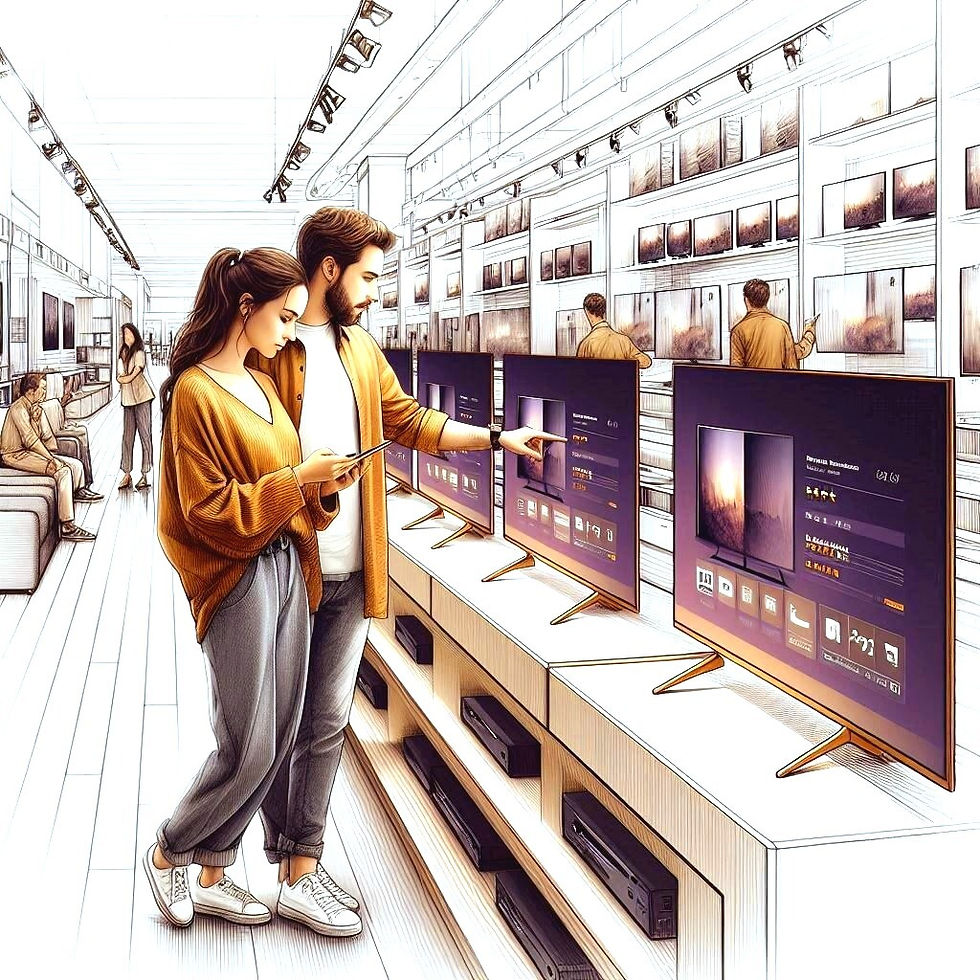
This pattern is most visible in CPG, but the same dynamic is playing out in consumer electronics – where private label is currently less dominant, but platform ecosystems and lower priced, feature-led insurgents are reshaping the middle in similar ways.
Sometimes the barbell ends serve different shoppers. But sometimes they serve the same shopper reallocating within her basket – trading down on one end to trade up on the other.
Either way, the pressure on the middle is significant.

End One: The Retailer Advantage
Private label (PL) was projected to reach $277 billion in US CPG sales in 2025, extending a multi-year run of growth. (Empower)
Three factors are driving its growth:
Trust in it has shifted. 71% of shoppers believe private label quality is equal to or better than national brands (Just Food). And it isn’t just for lower income: 35% of high-income households now identify as value seekers with fastest PL adoption in households earning $100K+ (Deloitte).
Innovation has shifted. Walmart's Bettergoods is not a "generic." It is an insurgent-style private label that competes on clean-label, plant-based, and on-trend formulation – not on being cheaper. Many top retailers have stopped copying and started out-designing.
And the economics are why retailers lean in hard: private label gross margins exceed 40%, versus 25–35% they get on national brands they stock (Just Food). Shelf space, assortment, and substitution are not preference decisions. They are economically rational ones.
Your retailer is not a neutral landlord. They are a competitor with both margin advantage and control over the shelf.
End Two: The Differentiated Premium Advantage
At the other end, advantage comes from differentiation – not size, not heritage, but clarity and delivery of value.
Insurgents
Insurgent brands are the most visible players here – typically under $100M in revenue, they accounted for nearly 39% of incremental category growth in US CPG in 2025, despite holding less than 2% share (Bain).
They win on hyper-specialization. They do not try to mean something to everyone. They mean a lot to someone – the GLP-1 user looking for high-protein, high-satiety snacks; the Gen Z skincare shopper chasing peptides and ceramides.
e.l.f. Beauty is a great example of a scaled brand that built from a $1 disruptor into a multi-brand powerhouse by owning a precise position – prestige-quality formulations at mass-accessible prices – and out-executing on speed, culture, and creator-led distribution. That is engineered differentiation.
Differentiated Legacy Brands
But this end is not exclusive to insurgents.
The legacy brands that continue to grow hold premium status have done similar work. They have proven, quality products, differentiated positioning, deep shopper understanding, and disproportionate investment in the touchpoints that actually drive brand decisions.
Premium is still defensible for legacy-brands. But only when it's clear what they stand for, deliver high value on spend, making it earned in the moment of choice.

Why the Middle Is Shrinking
Between these two forces, the middle is being squeezed – not by better marketing, but by the strong and structural value propositions of both ends.
Today's value-focused shopper is more fluid. She trades down where she sees equivalence and trades up where she sees distinction.
That leaves less room for brands that rely on being “good enough” on both.
The limited shelf gets adjusted accordingly.
The Data Asymmetry
I’ve been on the brand side of this table.
As VP of Insights at Samsung and Head of Shopper Insights at Unilever, I sat in JBPs where we presented “market share” numbers that were, in actuality, educated guesses.
Retailers like Costco only share your own sales data with you – not the category breakdown. You are arguing for shelf space with one eye closed while the buyer has the full view.
The asymmetry goes further. Every major retailer runs a first-party shopper loyalty program with data richer than anything a brand can build on its own. You can buy some of it – You can never own it.
The buyer knows which of your shoppers defect to their private label, what triggers the switch, and what brings them back. That is not a small information gap. That is a structural one – and it sits under every JBP negotiation whether it gets named in the room or not.
The Shelf Defense Audit
Before your next JBP, run your portfolio through five questions. Not as a marketing exercise – as a cross-functional one, with marketing, sales, product, insights, and finance in the room together.
The Speed Test: How long does it take to move from trend identification to on-shelf? If your answer is quarters while insurgents measure in weeks, you are launching for a consumer who has already moved on.
The Private Label Benchmark: If you blind-tested your lead SKU against the retailer’s equivalent, stripped of branding, would yours win on quality, design, and clean-label credentials? If the honest answer is “maybe,” your premium is already under pressure.
The Loyalty Test: If you were delisted tomorrow, would shoppers actively seek you out elsewhere – or substitute to whatever replaces you on the shelf? If the answer is substitute, you do not have a brand. You have a shelf position.
The Substitution Test: If the retailer's private label closed the formulation gap next quarter, what specifically would still make a shopper reach past it for us? If the answer leans on "brand equity" or "heritage," we are describing inertia, not differentiation.
The Delisting Vulnerability Score: For each SKU, how does your velocity per facing compare to private label in the same subcategory? If you are not outperforming and not uniquely differentiated, you are exposed.
Each question is uncomfortable by design. A brand that cannot answer at least three with evidence is not defending its shelf. It’s at risk of losing it.

What Wins the Shelf Now
Beating your landlord is not just a branding exercise. It is an intelligence problem – and then a disciplined investment one.
Every brand defending shelf well is able to answer four questions about the retailer's specific shopper with evidence, not opinion:
What role does your category play in her basket? Is it a trade-up category where she splurges, a trade-down category where she defaults to private label, or a battleground where brand still wins if the product earns it? Her role assignment changes everything about how you show up.
How does she perceive your brand versus the retailer's private label and the insurgent next to you? Not what your tracker says nationally. What the shopper at this specific retailer thinks, in her words, under real shelf conditions at her moment of choice.
Which journey touchpoints actually drive her decision? Most brands guess which touchpoints they should invest in. Winners have identified and fund the top ones that do 80% of the conversion work for their category and shopper – and starved the rest.
Where are you overinvesting, and where are you underinvesting to win her? Usually both. The shopper will tell you. Most brand plans do not ask her.
These answers do double duty.
They sharpen your brand strategy.
And they also become the evidence base for your JBP conversation – because a buyer who hears "here is what your shopper told us about how she uses this category and what moves her" is hearing a different kind of partner than one who shows up with share numbers and promotion asks.
This is Where We Work
Most teams walk into their next JBP with a national story and partial data.
The buyer walks in with a retailer-specific view and the full picture.
That is a high-risk gap.
Khatanalytics helps you close it.
We build a retailer-specific understanding of your shopper – what role your category plays, how your brand is evaluated in that context, what actually drives conversion, and where your current investments are misaligned.
So you walk into the meeting with your landlord with fact-based evidence, not assumptions – clear on what their shopper values, how you help them grow their category, and what deserves to stay on shelf.
Elevating your conversation from assortment negotiation to strategic partnership. And making you harder to replace.
If you want a deeper understanding of your shopper and where your shelf is most at risk – and what will actually defend it – that is a conversation worth having before your next JBP.
Understand where your brand sits across the barbell – and where you’re most exposed.
This blog draws from Khatanalytics' research report:
For the complete analysis – that includes the K-shaped consumer bifurcation, the shift needed in an agentic AI world, and the commerce retail barbell reshaping where your shopper actually decides – access the full report here
About the author

Uzma Khatana Rauf is the founder of Khatanalytics, a marketing intelligence and strategy consultancy specializing in Consumer & Shopper Experience Journey (CEJ) intelligence.
A former VP of Consumer, Shopper & Market Insights at Samsung, Head of Shopper Insights at Unilever, and VP of Custom Analytics at Nielsen, she helps mid-to-large CPG and Consumer Electronics brands develop higher-ROI strategies by knowing precisely where to invest across the full consumer journey.
Contact: uzmarauf@khatanalytics.com
Sources
Bain & Company – "Insurgent Brands Steal the Spotlight in 2025"
Empower – "Private-label food brands grew in 2025. Price wasn't the only draw"
Just Food – "Private label's growth surge and the US brand battle ahead"
FinancialContent – "The Evolution of e.l.f. Beauty (ELF): From $1 Disruptor to Multi-Brand Powerhouse"
Khatanalytics – 2026 Macro Trends: Five Divergences Brands Must Navigate (Jan 2026)
FAQs
Q1: What is the brand barbell?
The brand barbell describes how the retail shelf now operates: two structurally advantaged ends – the retailer's private label and the hyper-specialized insurgent – with the legacy middle squeezed between them. Both ends are taking share and driving category growth while national brands lag.
Q2: Why is private label growing so fast?
Three forces are compounding: shopper trust has shifted (71% now believe private label quality matches or beats national brands), retailers like Walmart are out-designing rather than copying with lines like Bettergoods, and private label gross margins exceed 40% versus 25 to 35% for national brands. That makes shelf decisions economically rational, not preference-based.
Q3: How do legacy brands defend shelf in this environment?
Win the data asymmetry. Build a retailer-specific view of the shopper – what role your category plays in her basket, how she perceives your brand against private label and insurgents at that retailer, which touchpoints actually drive her decision, and where your investment is misaligned. Walk into the JBP with shopper evidence, not national share numbers.


Comments